
The global classroom is changing fast. Projectors, chalkboards, and clunky desktop towers are giving way to a single sleek device: the touch screen panel for teaching. Teachers can now touch, write, cast, and connect in ways that were impossible just a few years ago. As schools and governments push digital upgrades, the hardware they choose matters more than ever. That is why, behind the screens in Foshan, one factory works around the clock to meet the surge in demand.
So what makes a modern best interactive panel for education? In one unit, you get a 4K display with precise multi-touch support so that several students can write, draw, and solve problems together on the same screen. Wireless casting turns phones, tablets, and laptops into instant lesson resources with no tangled cables. Built-in Android and Windows operating systems let teachers run whiteboards, educational apps, video quizzes, and review software without needing a separate PC.
Eye-care features—anti-glare glass, low blue light, flicker-free panels—protect young eyes during long school days. For IT teams, remote device management means fewer site visits and faster software updates. It is not just a screen. It is a complete teaching hub that makes lessons more interactive and classrooms easier to run.
Beyond the technical specs, the everyday benefits are just as important. Creating a superior learning environment is one of the biggest reasons schools make the switch. Traditional blackboard teaching often presents information in a flat, abstract way, making it hard for students to form clear mental pictures. An all-in-one teaching tool changes that. Important content can be displayed in vivid, multidimensional formats that capture attention instantly. The visuals are lively and intuitive, helping students understand difficult concepts more deeply. This creates a more engaged classroom atmosphere and encourages creative thinking rather than passive listening.
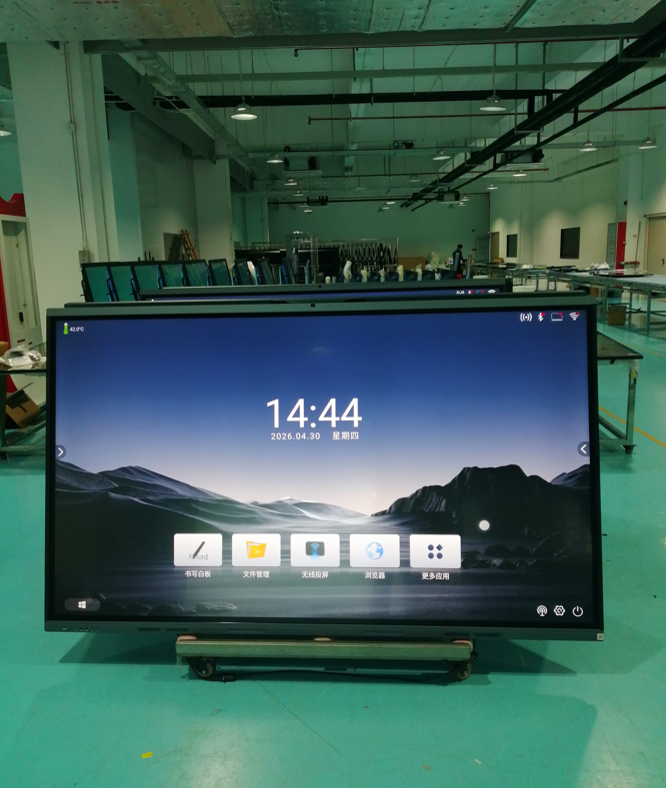
The device also fully meets the needs of multimedia teaching, which is essential for modern schools. Teachers can simulate real-world scenarios, bring in rich external resources, and switch between videos, interactive quizzes, live web content, and collaborative tools in seconds. Instead of boring, one-way lessons, students experience the outside world directly from their seats. This keeps curiosity alive and builds both learning ability and independent thinking. In short, the all-in-one does more than replace old hardware. It transforms how lessons are delivered and how students participate.
Building that experience requires obsession with detail. The factory’s strength lies in vertical integration: component sourcing, assembly, testing, and packaging all happen under one roof. On the production floor, rows of semi-finished panels move along a carefully organized line. Workers install OPS computer modules, fit anti-glare glass, and secure aluminum frames. Automated tools assist with calibration and alignment, while staff mark each checkpoint on digital records.
Every touch screen for classroom then enters a rigorous testing phase. Display brightness and color accuracy are verified. Touch responses are tested across every inch of the screen. HDMI, USB, and network ports are physically checked, and Wi-Fi, Bluetooth, and casting functions go through real classroom simulations. Finally, units are placed in burn-in racks and left running for hours to expose hidden defects. Only after passing every step do the panels receive a green tag, clearing them for shipping.
Packaging is built for long journeys overseas. Each unit sits in custom foam inserts inside a double-wall carton, with clear handling labels. For sea freight, pallets are wrapped and strapped to survive rough handling, then moved to the loading dock. Located close to Nansha and Shekou ports, the Foshan facility can load containers heading to Europe, the Americas, the Middle East, and Southeast Asia without unnecessary delays.
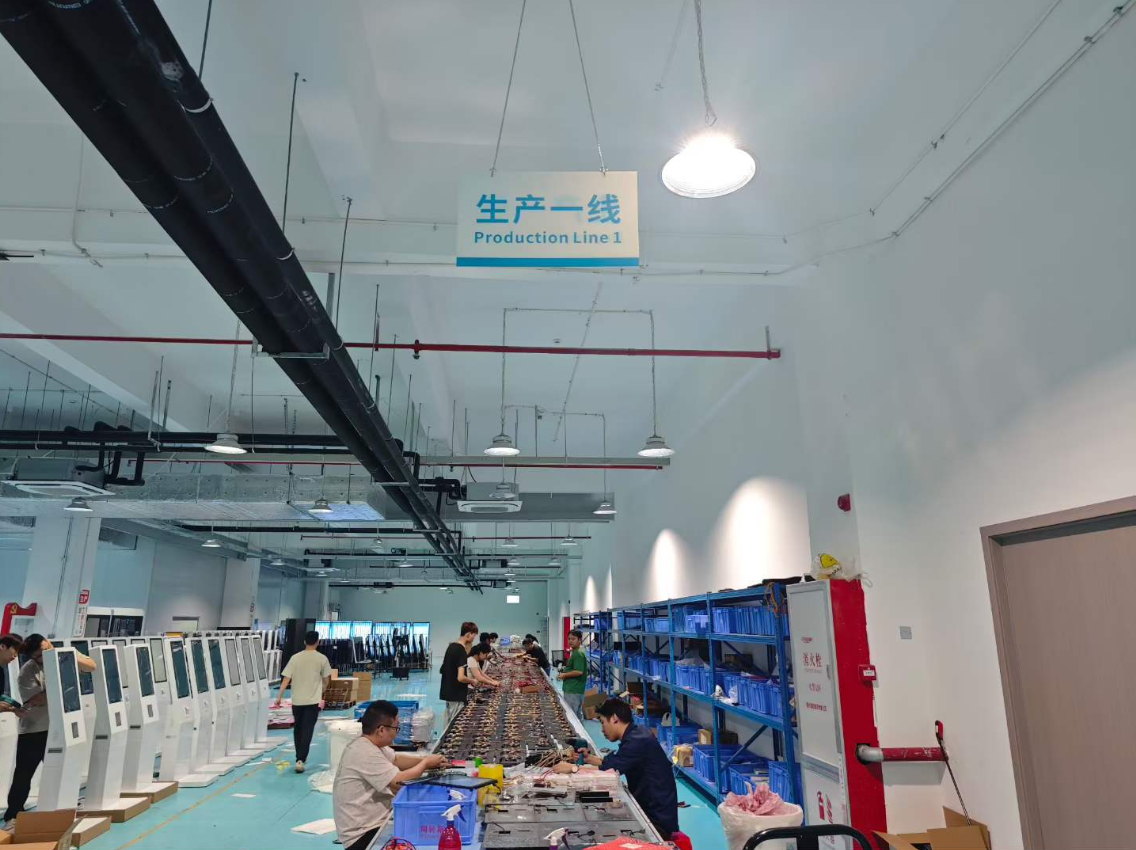
But the real story is the energy on the factory floor. Right now, the assembly line is moving at full speed. Screwdrivers hum, conveyor belts glide, and workers call out checkpoints as another set of 65-inch interactive touch screens for schools slides into the testing racks. Near the loading dock, boxes stack higher by the hour, and a forklift weaves through the crowd carrying shrink-wrapped pallets.
The production board lists over 300 units scheduled for the week—and the team is already discussing next month’s volume. “We’re pushing harder than ever,” says the shift leader, glancing at his checklist. “No shortcuts, but no slow days either.” As a truck reverses toward the dock, fresh units begin loading while new panels take their place on the line. The rhythm is intense, yet nobody rushes past a quality check. This is what a busy factory looks like when the world is waiting for better classrooms. In Foshan, it never stops.
Post time: Oct-08-2026