
* **Comparison with Integrated Units:** The interactive panel display—an “all-in-one” unit—fundamentally integrates and optimizes the entire teaching system. It eliminates the need for complex cabling (such as VGA/HDMI and audio cables), resulting in a cleaner setup and highly efficient use of space. It seamlessly merges “display” and “operation” into a single unit. Teachers no longer need to shuttle back and forth between a computer and the podium; instead, they can stand directly in front of the screen to control it via touch—tapping, dragging, and zooming in on elements within their courseware—thereby fostering a more interactive learning environment. Furthermore, these integrated units typically offer higher display brightness; in well-lit classrooms, their visual performance often surpasses that of standard projectors.
**II. Comparison with Other Interactive Teaching Technologies**
Beyond merely replacing traditional tools, the 75-inch interactive panel occupies a distinct position within the broader spectrum of educational technology.
**1. Personal Electronic Devices (e.g., Tablets)**
* **Characteristics of Personal Devices:** Interactive classrooms built around tablets emphasize personalized learning, with each student utilizing their own device. Students can complete exercises, submit answers, and participate in polls directly on their individual devices, while teachers receive real-time feedback to provide targeted guidance.
 * **Comparison with Integrated Units:** In this context, the educational interactive display serves as a “central hub for public interaction.” It is ideally suited for collective instruction, content sharing and presentation, and facilitating whole-class interactions. For instance, a teacher can instantly project a student’s tablet-based assignment onto the large display for the entire class to observe and discuss. The display’s large screen is instrumental in maintaining the class’s collective attention and serves as the focal point for delivering core knowledge and demonstrations. The relationship between the integrated display and personal devices is complementary rather than mutually exclusive: the former emphasizes “public presentation” and “guided instruction,” while the latter focuses on “private study” and “individual practice.”
**2. Traditional Televisions or Monitors**
* **Characteristics of Traditional Displays:** These devices serve solely as playback tools; they are unidirectional output devices that lack any interactive capabilities.
* **Comparison with Integrated Units:** This highlights the core value of the conference flat panel: interactivity. The display does not merely play content; it enables teachers and students to interact directly with the material via touch—for example, by annotating routes on a map, deconstructing and reassembling geometric shapes, or tapping on English words to hear them pronounced instantly. This sense of direct, hands-on control plays a positive role in engaging students and capturing their attention—a benefit particularly pronounced among younger learners.
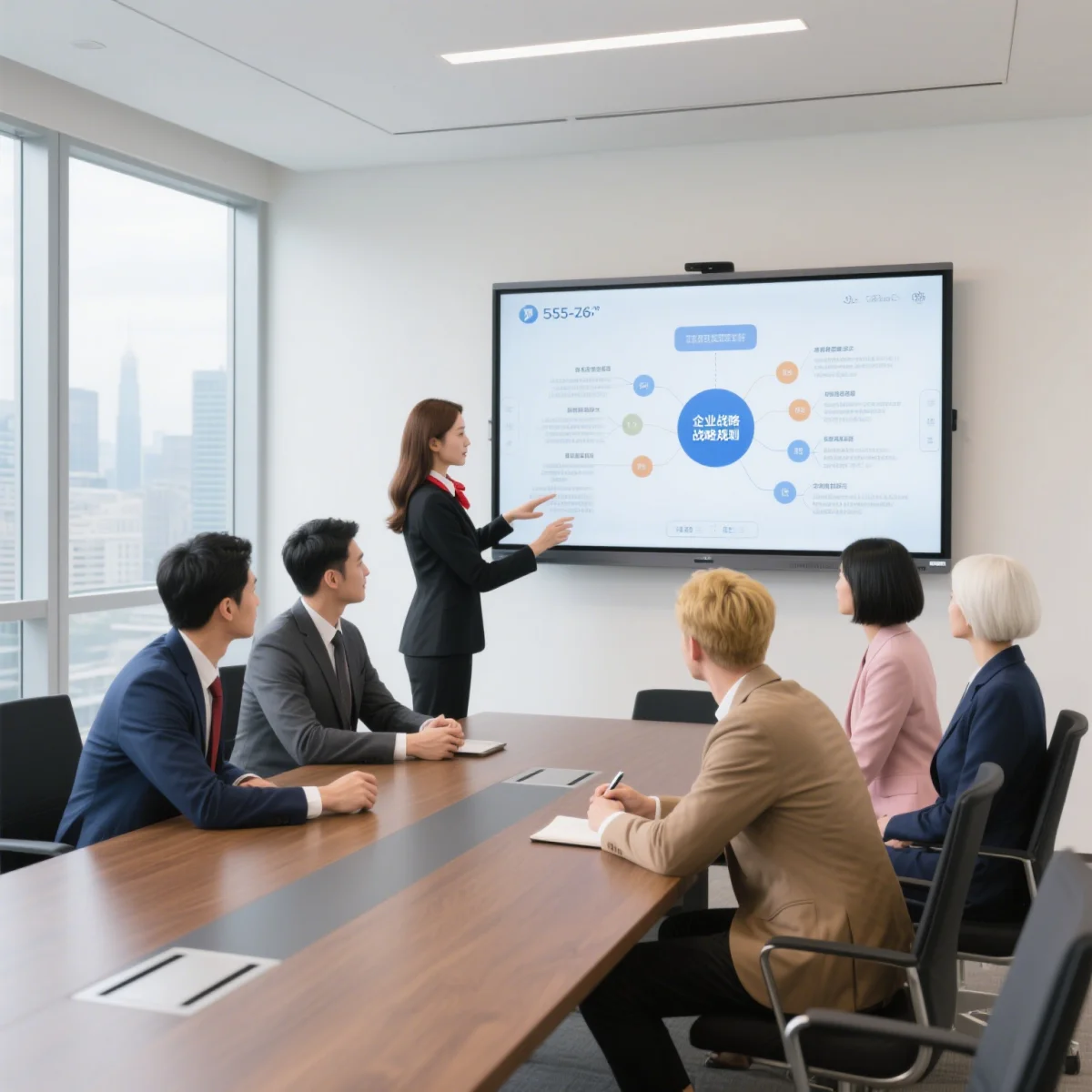 It is a piece of modern instructional equipment endowed with numerous practical features; however, its actual utility depends on whether it aligns with specific teaching requirements, the instructors’ capabilities, and the availability of technical support. When the necessary conditions are met, it can indeed serve as a highly effective auxiliary tool in classroom instruction.
Post time: Apr-10-2026