
The front of house in Southeast Asia is changing fast. In Singapore food courts, Malaysian QSR chains, Vietnamese banh mi shops, Thai cafés, and Jakarta bubble-tea stores, customers no longer want to wait while one cashier taps through a crowded counter. They want to walk up, read a clear menu, customize their order in their own language, scan a wallet QR code, and walk away with a ticket.
Self-service ordering and payment kiosks have moved from “future concept” to everyday infrastructure — and the region’s mix of young consumers, rising labor costs, and fragmented digital payments is pushing demand higher every quarter.
What makes a kiosk work in Southeast Asia is not just a big screen — it is how well the hardware handles messy, high-traffic, multi-payment reality. A modern pos malaysia payment kiosk starts with a 10-point capacitive touchscreen that responds instantly, even when customers tap with damp fingers or rush through a lunch peak. The glass is tempered and anti-fingerprint, built for thousands of touches a day. Under the display sits a full-code QR scanner with fill light, ready for wallet apps, membership codes, and promo barcodes — from QRIS and DuitNow to PayNow, PromptPay, MoMo and beyond, depending on the market. Paper receipts still matter in busy F&B environments. An integrated 80mm thermal printer gives customers order slips and kitchen copies on demand. A side switch lock makes paper changes fast and tool-free for staff, which matters when the machine never stops during evening rush. The kiosk body uses mild steel with a baking finish and an alloy frame — solid enough to survive knocks in a mall food court, clean enough to fit a premium café interior. Flexibility is critical for Southeast Asian store layouts. The same platform supports floor-standing or wall-mounted installation: a freestanding unit near the entrance for first-time and tourist customers, or a wall-mounted terminal above a narrow counter where floor space is tight. Systems run on Android, Windows, Linux, or Ubuntu, making it easy to pair with local POS software, kitchen display systems, and regional payment gateways. For operators, the business value is direct. A single kiosk can absorb the ordering load of one or two counter staff during peak hours. It reduces entry errors because the customer builds the order themselves. Smart menus suggest combos and add-ons at the point of decision, lifting average order value without pressuring staff. Front-of-house employees move from “taking orders” to “serving guests,” while the machine handles the repetitive transaction flow. In markets where labor is tight and foot traffic is high, that difference shows up as shorter queues, faster table turns, and a smoother customer experience.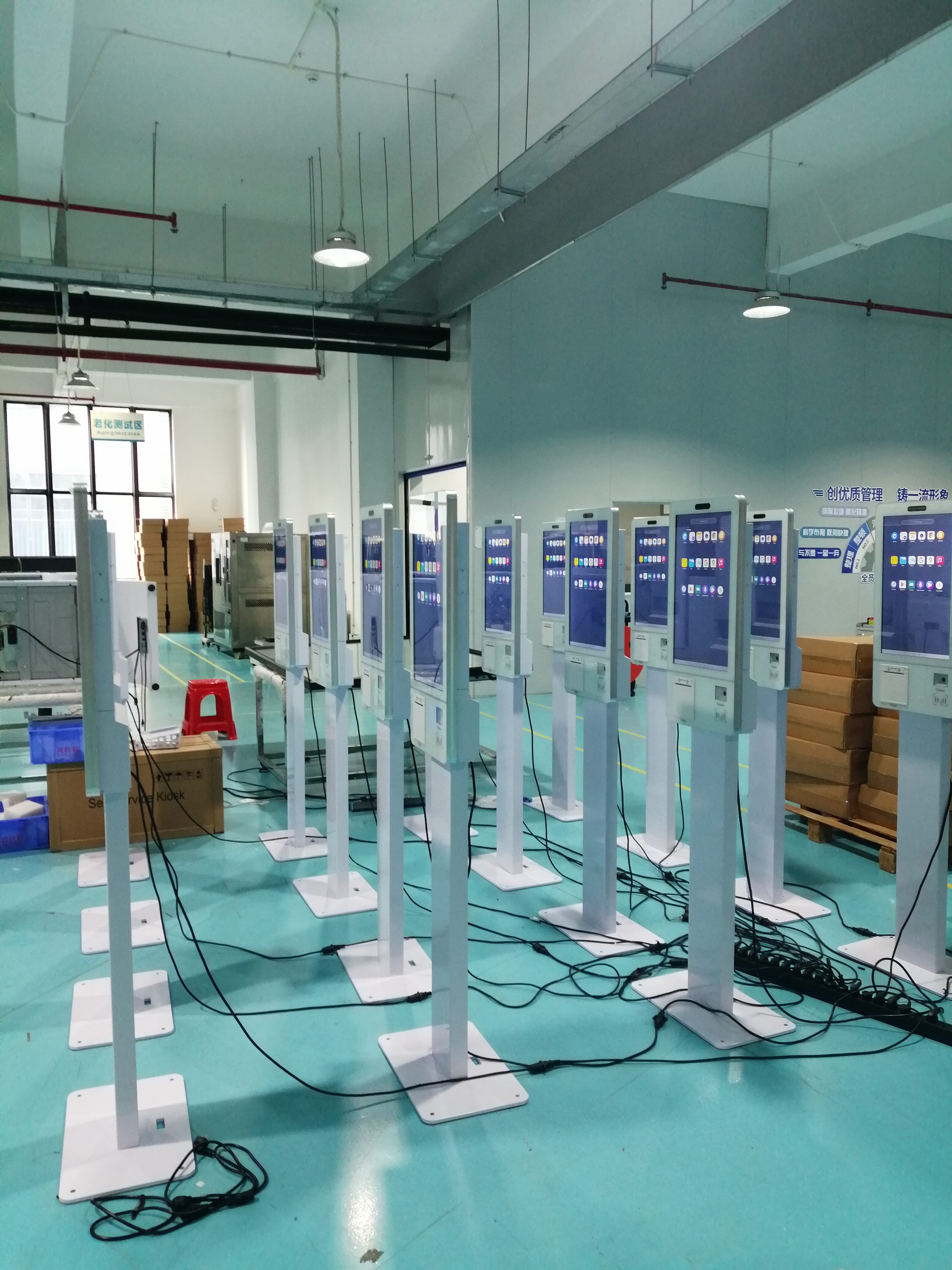 Turning those requirements into reliable hardware is where the factory floor matters. At SOSU’s Guangzhou production base, self-service terminals are built through vertical manufacturing — enclosure fabrication, screen assembly, motherboard integration, peripheral fitting, software debugging, and final testing all happen under one roof. In-house sheet-metal and finishing capability means custom shapes, mounting kits, and branding details can be adjusted without outsourcing the whole project. Line workers log each build stage, so every kiosk carries a traceable record from raw steel shell to finished terminal. Quality control mirrors real store conditions. After assembly, each unit goes through a full peripheral test: touch accuracy across the screen, QR scanner response under different lighting, printer paper feed and cutter action, Wi-Fi and wired network checks, and system boot stability. Kiosks then enter an aging run, operating continuously to surface overheating, freezing, or peripheral failures before they ever reach a client. Only units that pass every checkpoint move to packing. Export packing is designed for commercial buyers. Each touch screen payment kiosk is wrapped with foam protection, secured in a reinforced carton, and palletized for safe sea or air freight. Floor-standing models ship with protected stands and accessory boxes; wall-mounted kits include anchors and mounting hardware. With ISO9001-based quality management and CE, FCC, RoHS certifications, the factory prepares export documents and peripheral lists so distributors and integrators across Southeast Asia can deploy faster after arrival. The real signal of demand is the floor itself. Walk into the Guangzhou workshop during a production week, and the line feels alive. Enclosures click into place along the rail. Technicians swipe test menus across glowing touchscreens. QR scanners beep as they read one code after another. In the aging area, rows of kiosks run through another quiet overnight shift. At the loading dock, cartons stack into neat towers, a forklift threads between pallets, and a truck backs in for the next container bound for Port Klang, Tanjung Priok, or Ho Chi Minh City. The weekly board already shows steady kiosk output, with distributors from Malaysia, Indonesia, and Vietnam reviewing samples and planning rollouts. “Southeast Asia doesn’t want a generic tablet on a stand,” the production supervisor says, checking a batch list. “They want a terminal that reads local QR codes, survives humidity, and still looks sharp after a year of daily use.”
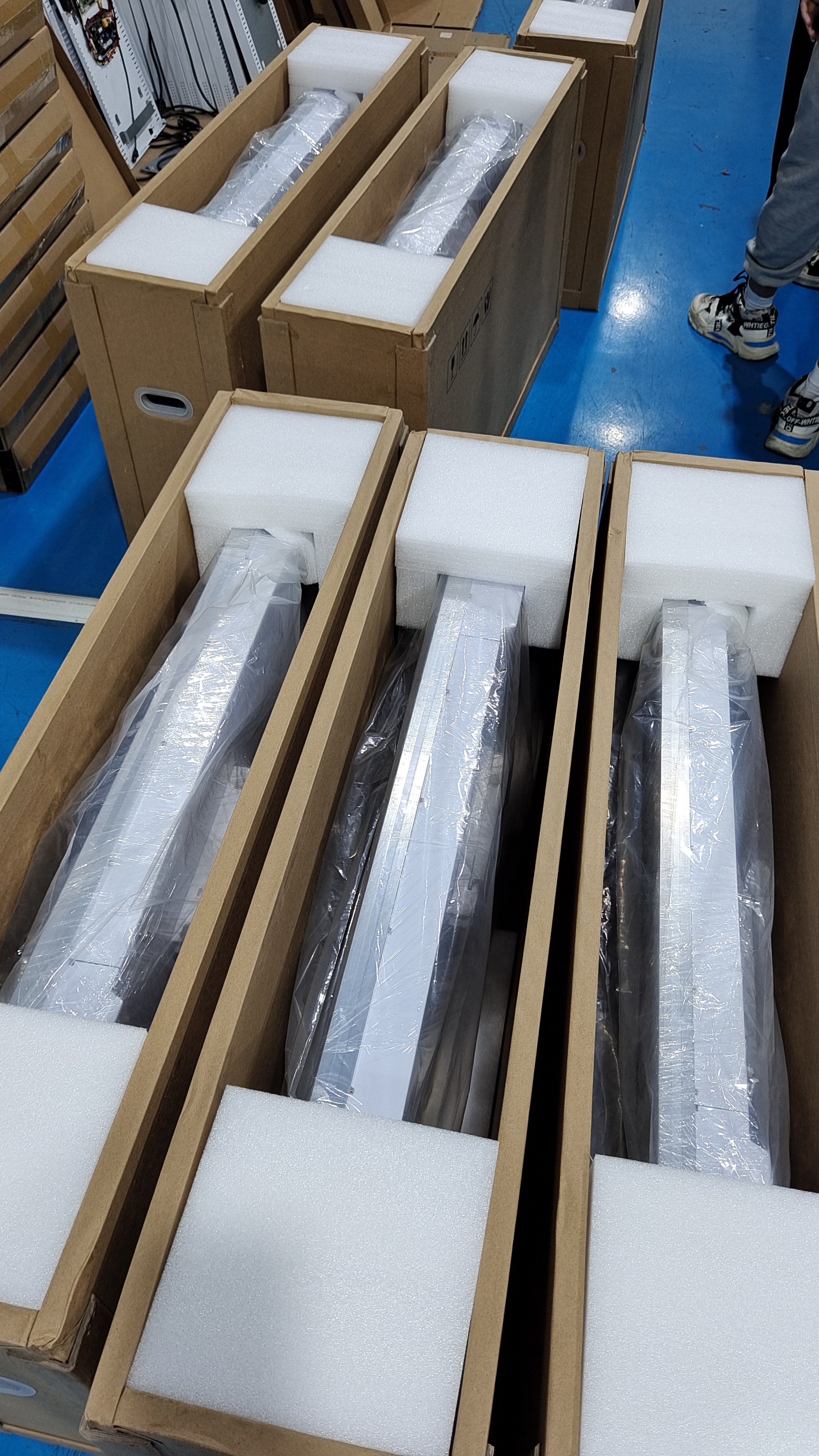 That is the gap a manufacturing base fills. As F&B digitalization spreads from Singapore’s smart-nation pilots to neighborhood cafés across the region, the winners will not be the cheapest kiosks —self-checkout kiosks will be the ones that keep working through heat, crowds, and peak-hour pressure. In Guangzhou, the line keeps moving: enclosures welded, screens calibrated, scanners tested, terminals packed, and shipped to a food court or QSR lobby where a customer is about to tap “order” without ever joining a queue. SOSU Electronic Technology — self-service kiosks built for the way Southeast Asia does business.
Post time: Nov-04-2026