
In the electronics market, there was a time when almost every household owned a television. Today, LCD TVs have become market stars; driven by supportive policies, the wide range of available sizes has sparked a wave of trend-driven marketing.
However, while televisions have long dominated the landscape, all-in-one interactive displays (often used in education) have emerged as a powerful new force. Their rapid growth and versatility across various settings have captured consumer interest, leading to questions about how they differ from standard televisions.
To be honest, while these devices may look similar at first glance, there are fundamental differences between them.
As is widely known, flat panel display for classroom are suitable not only for education but also for a wide range of commercial applications.
Depending on the intended use and functional requirements, the Sosu lineup includes models designed for teaching, conferencing, and advertising (digital signage). In contrast, televisions are primarily used for home entertainment.
From the perspective of application scenarios and functional versatility, Sosu all-in-one displays clearly outperform standard televisions.
Beyond these factors, there are many other differences between the two.
Product Functionality
flat panel display for classroom are highly favored by consumers, largely due to their powerful capabilities.
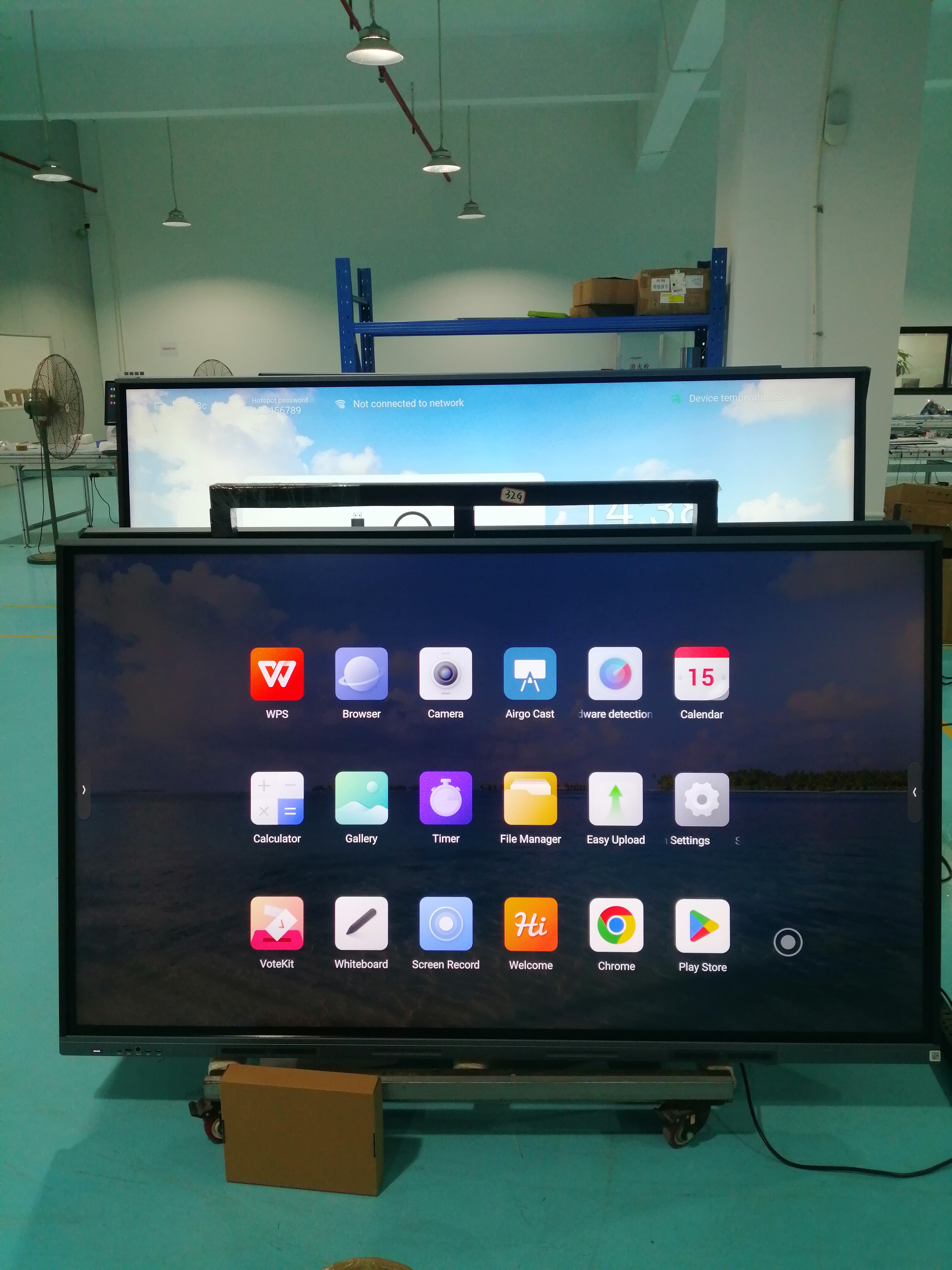 They meet a wide range of user needs—offering features such as remote control, the ability to freely edit content on the digital whiteboard, and support for various file formats and applications. Televisions, on the other hand, are mostly limited to playing video content. Even with recent technological advancements in TVs, they still have a long way to go compared to Sosu all-in-one displays.
Product Construction and Technical Support
In terms of construction, Sosu all-in-one displays consist of components such as a display screen, a touchscreen, a motherboard, and a power supply. However, they demand much higher hardware specifications; the extensive functionality involved creates significant challenges regarding materials, durability, and performance. In contrast, while televisions share some structural similarities with flat interactive panel, there are significant differences regarding their target users, application environments, and functional capabilities; consequently, televisions do not require the same level of sophistication in terms of hardware and software.
Product Price
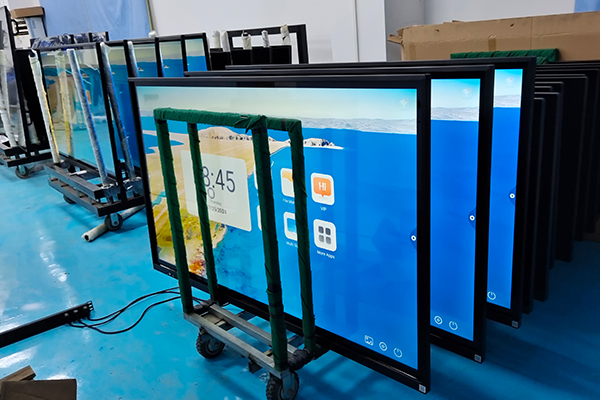
As the saying goes, “You get what you pay for.” Although flat interactive panel currently offer excellent value for money, it is undeniable that a product’s quality and technological sophistication determine its value.
As previously mentioned, these teaching units incorporate advanced technology; when combined with the materials used and the specific needs of their target users and environments, it is inevitable that they come with a higher price tag.
Televisions, on the other hand, do not require such high standards for materials or technical specifications. This results in lower manufacturing costs and, consequently, a more affordable price point.
In summary, while flat interactive panel and televisions are both electronic products that share some connections, they differ significantly in terms of materials, functionality, and technological sophistication.
However, as these teaching units become more widely adopted across various scenarios, they are poised to become an indispensable part of our daily lives and work. The future holds many possibilities—let us look forward to what lies ahead!
Post time: Aug-10-2026