
The Lunch Rush Problem: How Self-Order Kiosks Are Changing Southeast Asia’s F&B Counters
It’s 12:15 in a Jakarta mall food court. The line is twelve deep, one cashier is on the till, and the kitchen is already three tickets behind. A customer gives up and walks to the next stall. Everyone in the restaurant business knows this scene — and it is the reason self-service ordering kiosks have moved from novelty to necessity across Southeast Asia.
The pressure is structural, not temporary. Minimum wages in Malaysia, Indonesia, Thailand and Vietnam have climbed steadily, while staffing a counter through peak hours remains difficult. At the same time, customers have changed their habits: they order through apps, pay with e-wallets, and expect to customize a drink without explaining it three times. A device that lets them build an order on screen, pay by QR, and collect a printed ticket fits both realities at once. For operators, it is not a gadget — self payment machine is a way to serve more people with the same team.
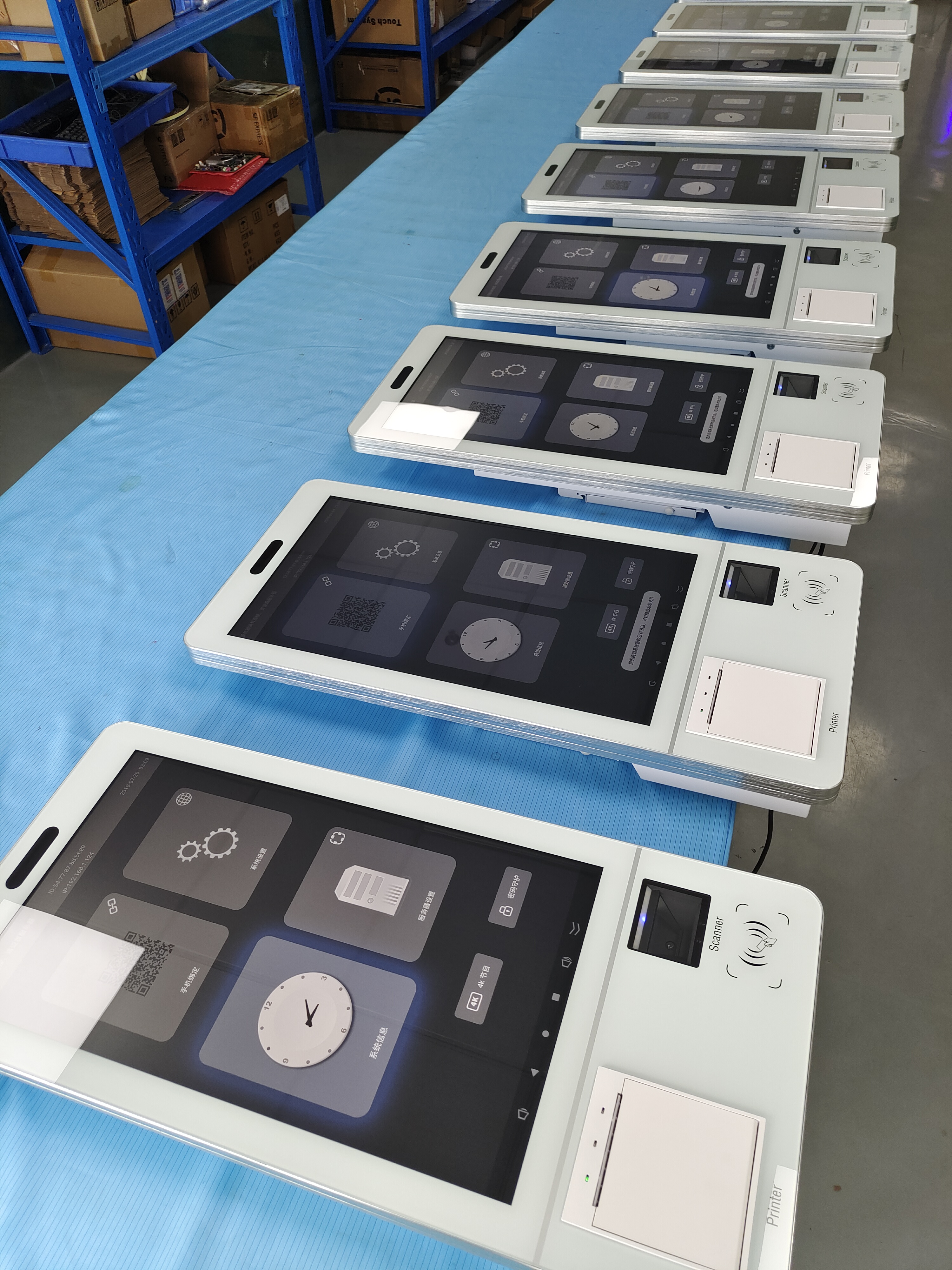
The hardware has to be built for that job. A kiosk running a full lunch shift will take thousands of touches, and the screen cannot hesitate. SOSU’s ordering terminals use 10-point capacitive touch with tempered, anti-fingerprint glass — responsive even when fingers are damp or greasy. Below the display sits a full-code QR scanner with fill light, so wallet payments, membership codes and promo barcodes read reliably in dim corners or under strong mall lighting. An 80mm thermal printer handles order slips and kitchen copies, with a side switch lock that lets staff change paper in seconds without tools.
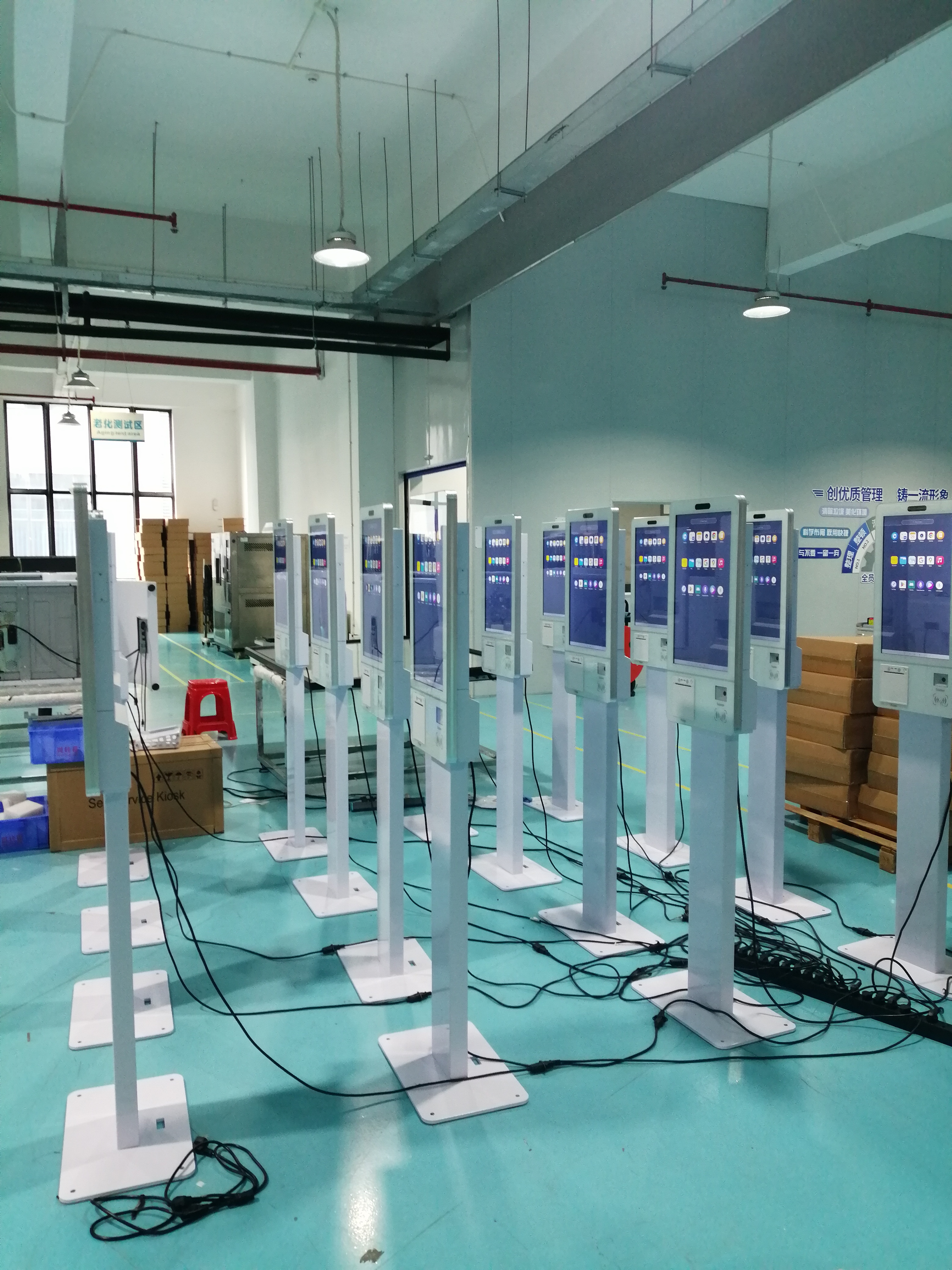 The body matters as much as the electronics. Mild steel with a baking finish and an alloy frame keeps the unit rigid in high-traffic areas, easy to wipe down at closing, and presentable enough for a premium café. Installation stays flexible: floor-standing for a spacious lobby or entrance zone, wall-mounted where counter space is tight. Android, Windows, Linux, and Ubuntu support means the kiosk integrates with existing POS and kitchen display systems rather than fighting them.
What operators notice first is not the screen — the touch screen ordering kiosk is the queue. One kiosk absorbs the ordering load of one or two counter staff during peaks, and it never mishears a modifier or forgets an upsell. Customers who build their own order tend to add drinks and sides; menus can suggest combos at the exact moment of decision. Staff shifts from punching orders to serving tables and handling exceptions. The result is fewer errors, faster turns, and a calmer floor at the busiest hour of the day.
Getting that reliability into every unit is a factory problem. At SOSU’s Guangzhou base, established in 2009, ordering kiosks are built through in-house vertical production: sheet-metal enclosure fabrication, screen assembly, motherboard integration, peripheral fitting, software debugging, and final testing under one roof. Eight appearance patents and ISO9001, ISO14001, CCC, CE, FCC, and RoHS certifications back the process. Because casing and finishing happen inside the plant, custom shapes, mounting kits, and branding details can be adjusted without handing the project to a third party.
Testing follows real store conditions rather than a checklist. Each terminal runs through touch accuracy across the full display, QR scanning under different light levels, printer feed and cutter action, Wi-Fi and wired network checks, and system boot stability. Units then go into an aging run, operating continuously to expose overheating, freezing or peripheral faults before shipment. Only terminals that clear every stage are packed.
Export packing is built for long freight. Foam protection, reinforced cartons and palletized loading keep units intact through sea or air transit; floor-standing models ship with protected stands, wall-mounted kits with anchors and hardware. Documentation and peripheral lists travel with the container, so distributors in Malaysia, Indonesia, Vietnam and the Philippines can deploy soon after arrival instead of chasing missing parts.
Walk the Guangzhou workshop during a production week, and the pace is obvious. Enclosures settle into place along the assembly rail. Technicians swipe through test menus on rows of lit screens. Scanners beep in sequence as code after code is read. In the aging area, kiosks run quietly through another overnight cycle. At the dock, cartons rise into stacks while a forklift moves between pallets and a truck backs in for the next container.
 “The kiosk isn’t replacing anyone,” the production supervisor says, checking a batch sheet. “It’s taking the part of the job nobody enjoys — repeating the same order two hundred times — so the staff can do the part customers remember.”
That is where the difference lies. As digital ordering spreads from mall chains to neighborhood shops across the region, the kiosks that survive daily use will not be the cheapest ones. They will be the ones built with tolerance for heat, crowds, and a thousand taps a day. In Guangzhou, the line keeps moving: steel formed, screens calibrated, scanners verified, terminals packed and shipped toward a counter where the queue is about to get shorter.
SOSU Electronic Technology — self-service ordering kiosks engineered for Southeast Asia’s busiest hours.
Post time: Nov-16-2026